
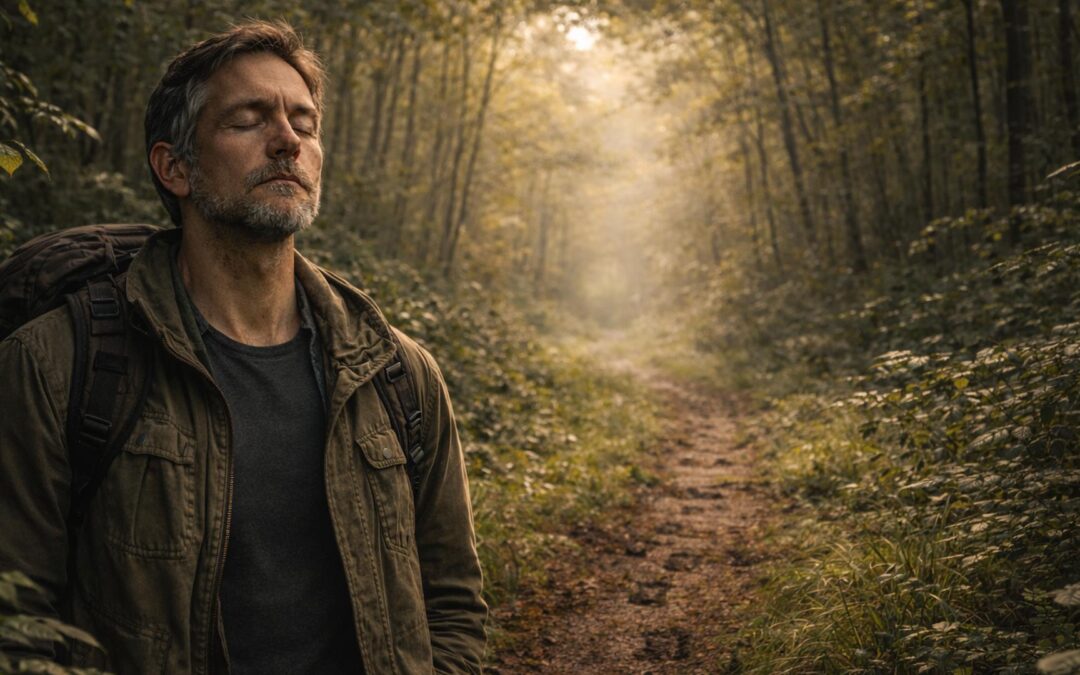
As my eyes close, the search begins in that quiet country where sight no longer rules. There are things the eye refuses to confess—small presences it passes over without pause—yet they do not vanish when darkness settles upon the lids. They remain where they have always been, patient and undisturbed, waiting for some other faculty to take their measure.
Those faint murmurs I had long ago trained myself to ignore return first from the edges of attention. What once seemed no more than stray noise begins to gather shape and intention, and I come to understand that vision, so often trusted above all other senses, is but a narrow witness among many. If I am to discern what moves about me, I must lean upon quieter instruments than sight alone.
In such moments the advantage of certain men becomes plain. Some possess a listening that runs deeper than habit allows. They do not merely hear; they attend. Where most pass untroubled through the world, these few gather the fragments left behind—the altered breath of the wind, the slight tremor hidden in leaves, the shifting weight of something that would rather remain unseen. Treasures lie among such details as well, though they pass unnoticed by those whose eyes have already declared the place empty.
Nor do such men surrender their minds to the ready narratives set before them. Others are eager enough to declare what matters and what does not, where danger waits and where safety may be trusted. Yet these listeners do not yield so easily. They decline the borrowed certainty offered by louder voices and instead allow understanding to unfold slowly through their own patient attention.
Should they walk within a jungle thick with shadow and heat, their senses would not sleep. Beneath the layered cries of birds and the restless hum of insects they would catch another sound entirely—the quiet padding of careful paws, measured and deliberate, a hunter believing itself unseen. While others pass forward unaware, these few would pause, for something within them has already spoken.
Thus they become the ones others seek when the trail has grown thin and the obvious signs have failed. When experience falters and ordinary instincts fall silent, it is their listening that is called upon, for they have remained in contact with a faculty many have allowed to fade.
Perhaps the same might be asked of us.
Close the eyes for a moment and look beyond what sight insists upon. Attend instead to the smaller sounds once dismissed as unimportant—the faint stirrings beneath the louder noise of the world. In such listening there is often a warning given before trouble fully reveals itself, a quiet signal that danger walks nearer than it first appears.
For among those overlooked sounds are also the softer signs of what is good and easily missed: the hidden path where the ground grows sure beneath the feet, the unnoticed opening where light slips through the canopy, the small treasure lying where hurried eyes declared there was nothing at all. One who learns to listen well does not merely escape what threatens him.
He begins to perceive a world that had never been silent at all—only patient, waiting for a quieter mind to notice its counsel. And so the eye, which once seemed the surest guide, is set aside for a moment, and the deeper search begins again in that same quiet country where sight no longer rules, and where the things it refused to confess may at last be discovered.
© 2025 Steven Scott. All Rights Reserved.
Unauthorized use or reproduction of this material is prohibited without written permission.