
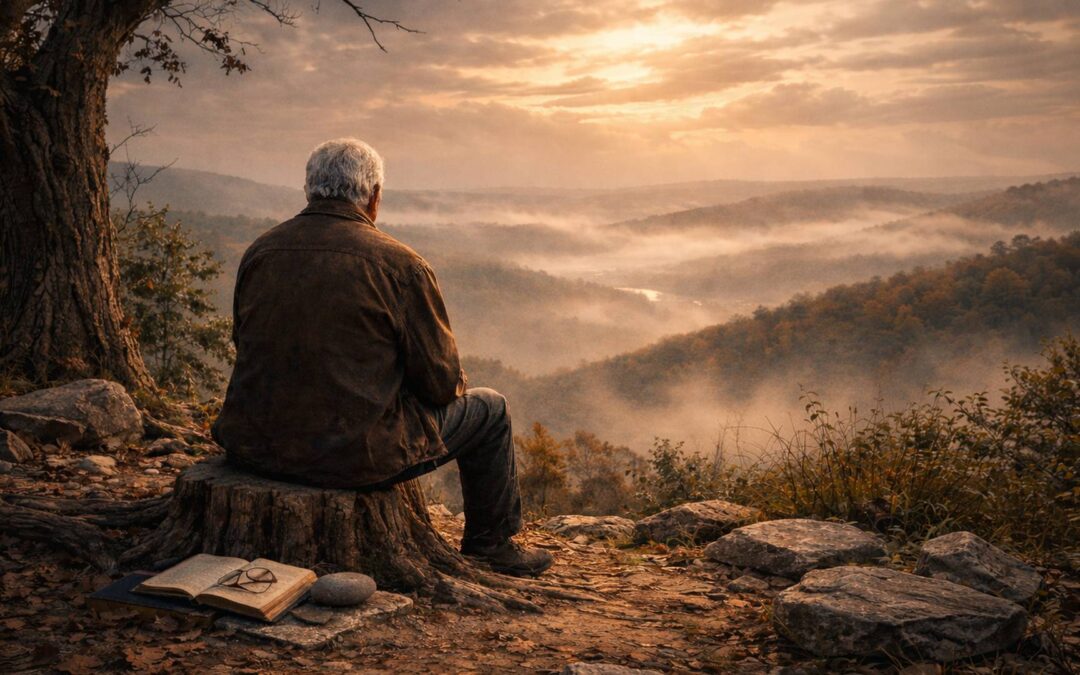
There comes a season in life—most often as the years gather and the days begin to weigh differently—when a person must pause and look again at where they stand. Not because the ground has given way, but because remaining upon it without question has grown too easy, and ease itself has become suspect.
Across a lifetime, patterns are laid down gradually, shaped by repetition and survival, until what once offered clarity settles into form. Beliefs that first served as guidance harden into structure; what once steadied becomes boundary. This does not happen by intent. It happens by duration. And in time, the posture shaped by such holding begins to narrow, even as it claims firmness.
In such seasons, the familiar responses emerge. Some cling more tightly to what they have carried, guarding it against any thought that might press from beyond its frame. Others loosen their grip entirely, giving voice to discontent without restraint, mistaking movement for change. Both are understandable. Neither is sufficient.
For there is another way of standing, though it offers no comfort at first.
It requires the will to stop, and to turn back toward what has been borne so long that its weight is no longer questioned. To sit with it, and to trace—not hastily, not defensively—how it came to rest where it did. What shaped it. What it answered. What it may have obscured by its very familiarity. Such reflection does not promise correction, nor does it assure confirmation. It asks only for patience enough to remain present while the matter reveals itself.
Often, what comes is not clarity, but resistance. A sense that what once fit cleanly now presses at the seams. That what once felt settled will no longer rest without strain. The task is not to decide too quickly what must be kept or cast aside, but to endure the uncertainty long enough to learn whether what is held can still be held in truth.
This turning does not erase a lifetime of learning. It tests it. What is sound remains without defense. What is not loosens, not by force, but by recognition. Understanding, in such moments, is not claimed. It is arrived at slowly, as one arrives at a clearing after long travel.
And when such reflection is allowed—without haste, without demand—something subtle alters its balance.
The stance widens.
The breath eases.
What has been learned is no longer guarded by habit alone, but carried with awareness.
Not as certainty.
But as wisdom willing to listen.
© 2025 Steven Scott. All Rights Reserved.
Unauthorized use or reproduction of this material is prohibited without written permission.