
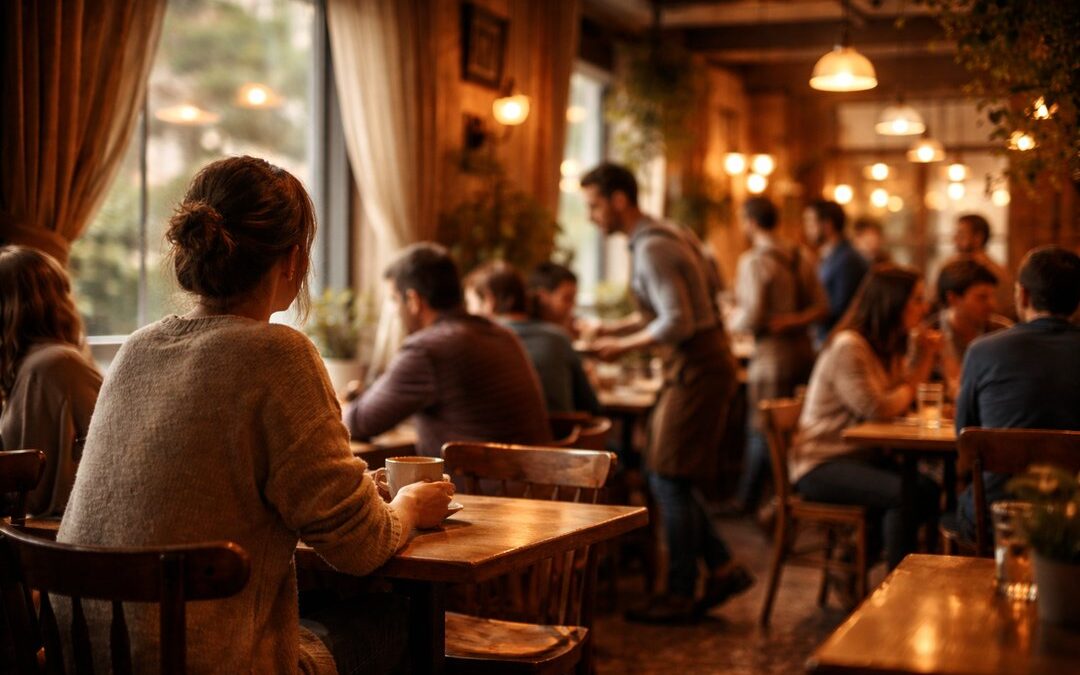
I sat waiting—wondering, weighing the path ahead. From somewhere beneath thought, a notion surfaced—not abruptly, but slowly, like a bubble rising from depth, gathering shape as it climbed, until it broke the surface and was gone. And I wondered if this, too, was waiting: not emptiness, but something moving upward unseen.
Was waiting meant to be stillness alone—statue-quiet, unmoving, while the world turned past me? Or was it something subtler: a way of remaining engaged, where what matters most often arrives without announcement, slipping through open hands because it comes without force?
The meaning began to take shape as I watched the room around me.
The café was alive with motion—not chaos, but order. One server moved steadily from table to table, replenishing what was nearly gone before it was asked for. Another lingered near the narrow passage to the kitchen, watching—not idle, not withdrawn—reading the unspoken needs of the tables entrusted to them.
Each was waiting.
Each was working.
Each moved within an assignment that required presence rather than pause.
They did not step away from the room in order to wait.
They entered it more fully.
By the end of the day, each would understand what it meant to wait tables—not as delay, but as service. Not as absence, but as attention given shape through movement. Waiting here was not separate from action; it was action rightly held.
The phrase returned to me: those who wait upon the Lord. It is often imagined as stillness, as quiet withdrawal. Yet the words that follow speak of motion—of running without weariness, of walking without collapse. The image is not of closed eyes, but of lifted ones. Not of restlessness, but of readiness.
Perhaps waiting is not separate from action at all, but action held in attention—
eyes open, hands occupied, fully present to what is needed next.
© 2025 Steven Scott. All Rights Reserved.
Unauthorized use or reproduction of this material is prohibited without written permission.