
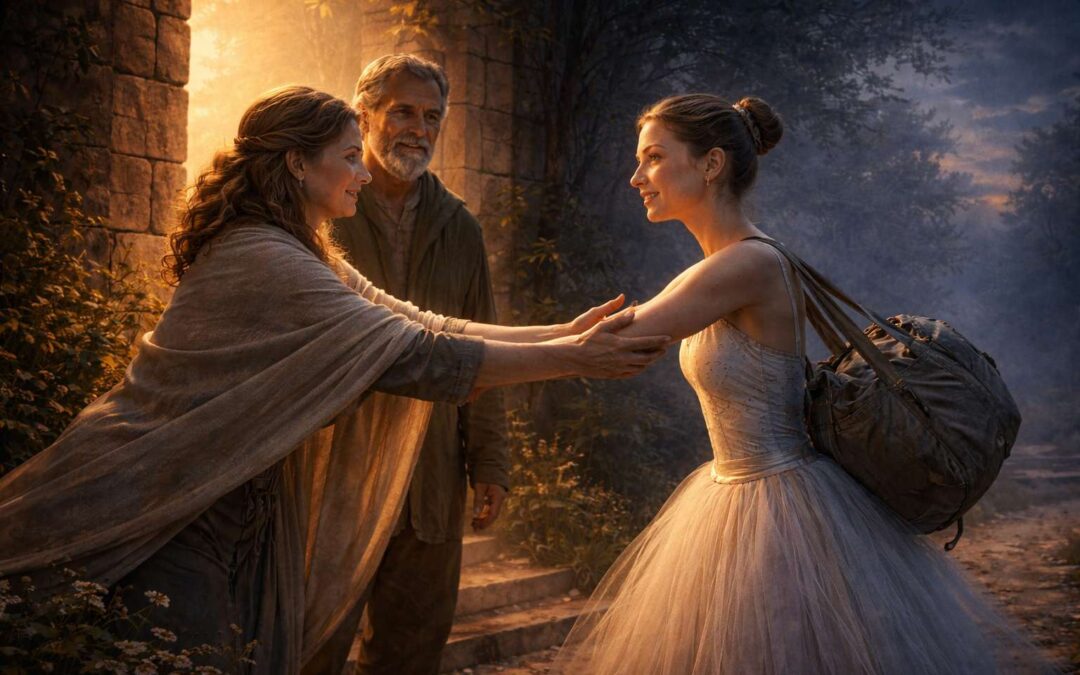
I come to you not without agenda, but with one clothed in a different cadence, spoken for those who would dim the eyes and press the fingers tight upon the nose, believing that what cannot be seen or smelled may cease to exist. Before judgment rises too quickly, I ask only one thing of you—one moment of honest consideration. If a beautiful Russian ballerina were fleeing political oppression, would you not gather her quickly, draw her into the shelter of your nest, and call it mercy? And if the same fear drove another north from Mexico, would your first motion be welcome—or refusal?
The scene is painted by practiced hands, masters of message and posture, crafting their words not for the desperate ear but for domestic voters and attentive donors, pressing positions rather than mending what is broken. You may ask how I know this, how I presume to understand their intent, how I dare speak against those who claim they labor toward a better world. But I have lived long within this promised land. I have walked its streets and lingered in its quiet places. The people I meet in the ordinary rhythm of my days are not cartel kings, nor traffickers, nor the criminals they are framed to be. They are men and women fleeing violence, extortion, and governments that have failed them utterly, following pathways worn smooth by generations before them—paths carved not by malice, but by survival.
I recognize the message because of how it is spoken. It arrives wrapped in elevated English, formal and polished, proclaimed as though it reaches its intended audience, yet it passes through them like a ghost—unseen, unheard, untouched. How, truly, are they to come as instructed, when they cannot speak the language, cannot decipher the forms, cannot summon an internet connection that no longer exists? It would take a generation to arrive by such means, in a land whose own beginnings were forged by those who once fled toward the same hope.
If the aim is truly to make this country great again, then let us cease patching what has already failed. Let us stop calling prejudice enforcement and mistaking chaos for order. Let us end the quiet creation of casualties in the land that calls itself free. Instead, let us enter the harder war—the work of restoration. Let us bend the knee, not in weakness, but in remembrance. Let us examine ourselves and ask whether we have become our own most faithful ghost, haunting the ideals we once claimed to hold, and whether we have forgotten how to heal what is broken rather than multiplying the broken in our wake.
© 2026 Steven Scott. All Rights Reserved.
Unauthorized use or reproduction of this material is prohibited without written permission.